This has been a year that demonstrated, in concrete terms, what Canada's AI leadership is actually worth.
The investor community has reached a verdict. Venture capital investment in Ontario AI companies reached $3.9 billion this year — a 50 per cent increase — with 484 investors now actively backing Ontario AI companies. A record 121 new AI companies established themselves in Ontario, reflecting a sustained confidence in what this ecosystem is producing.
Responsible business adoption of AI is accelerating. Seventy-five per cent of Ontario companies are now executing on their AI vision, up five points year-over-year. The opportunity ahead — particularly for Canada's small- and mid-sized businesses — is even larger.
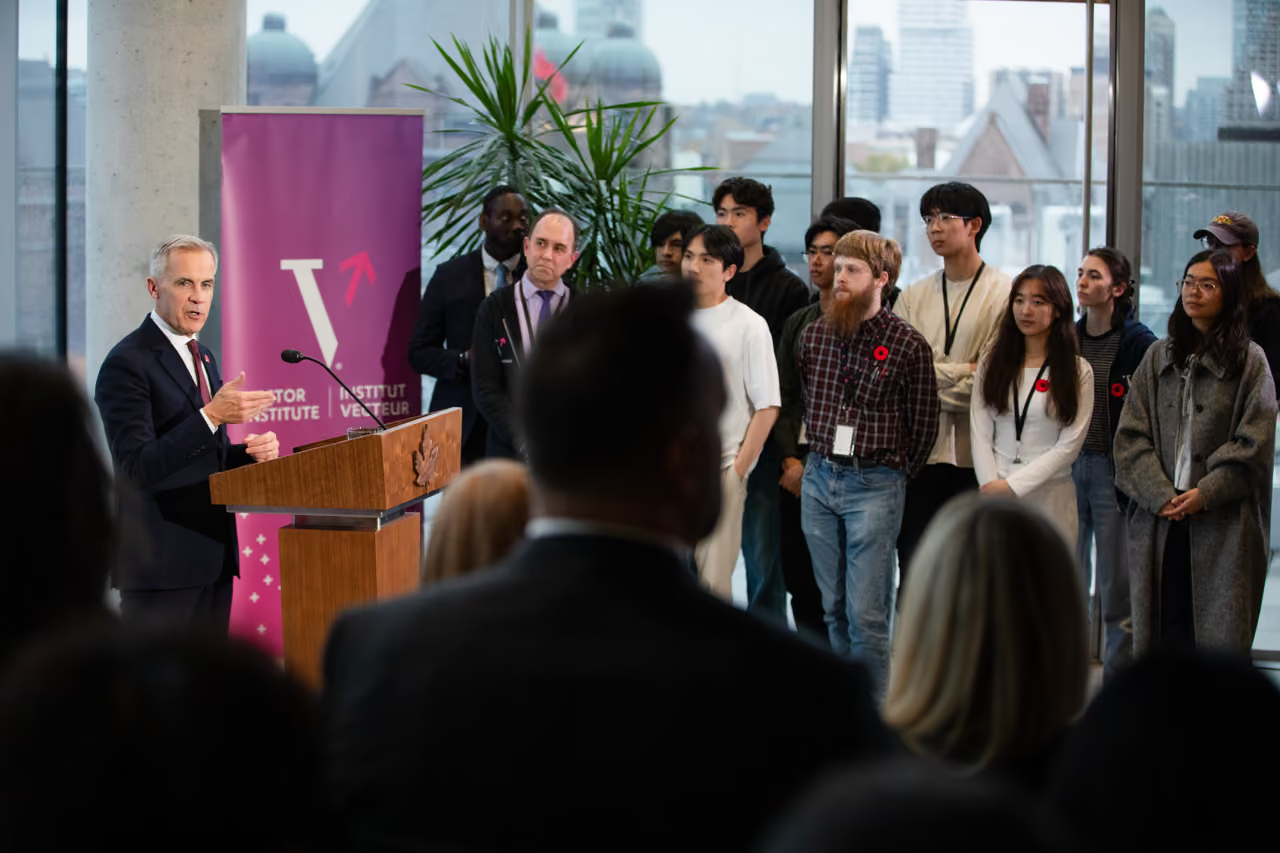
The federal government has recognized what we have built. Prime Minister Carney's recent visit to Vector and the $925.6 million budget commitment to sovereign AI infrastructure signal that Canada is serious about leading in the global AI economy.
Glenda Crisp's first year as President & CEO has further strengthened Vector's position. Her ability to connect research excellence to real economic impact, and to bring the right momentum to that work, is exactly what this moment in history demands.
The work ahead is clear: build the talent, compute and data infrastructure that keeps Canada competitive.
As we approach Vector's tenth year, the question isn't whether Canada can lead in AI. We've answered that. The question is whether we'll move fast enough to stay there.

As we approach Vector's tenth year, the question isn't whether Canada can lead in AI. We've answered that. The question is whether we'll move fast enough to stay there.
After years of building towards a future promise, the past year saw responsible AI adoption become a present reality for more and more Canadians, showing up in our hospitals, on our factory floors, and in the startups changing how we treat patients, catch fraud, and build more resilient businesses.
At the centre of these improvements to Canadians’ lives is Vector’s robust research community. Vector-affiliated researchers published 451 papers at the world's most competitive global AI conferences and journals, including 81 at NeurIPS and 64 at ICLR. Fourteen new Faculty Members joined our national community. Three of our researchers were elected Fellows of the Royal Society of Canada.
This talent attraction is sustained excellence that shows how Canada, including Vector researchers, is shaping the global AI conversation. Vector has known that AI talent is a compelling story for some time. The more compelling chapter is what happens when that research output meets the real world, and AI possibilities come to life.
This year, Vector-commissioned research from Deloitte Canada to put a number on what AI growth means for Canada. AI has already contributed $100 billion to our economy, and we are on track to add $298 billion more over the next decade — $122 billion of that right here in Ontario — projections built on the work happening in this report.
Our FastLane program supported almost 300 startups across the country — companies using AI to safeguard supply chains, minimize factory downtime, and reinvent patient care. In Ontario alone, more than 71,000 professionals required AI skills this year, a 61 per cent increase, reflecting how broadly this technology is reshaping work across every sector.
Perhaps the most powerful data point is that 91 per cent of Vector-trained AI graduates choose to build their careers right here in Ontario. They are the talent foundation this economy depends on.

AI has already contributed $100 billion to our economy, and we are on track to add $298 billion more over the next decade — $122 billion of that right here in Ontario — projections built on the work happening in this report.
Still, work remains. Canada's small- and mid-sized businesses — the backbone of our economy — have been slower to adopt AI than larger enterprises. Closing that gap in a manner that is ethically and equitably responsible is our defining challenge and our greatest opportunity.
Canada's national AI strategy has set the ambition; Vector's job is to deliver on it, through the researchers, practitioners, partners, and members of our ecosystem whose work fills every page of this report. I am deeply grateful to all of them.
We will drive excellence and leadership in Canada’s knowledge, creation, and use of artificial intelligence to foster economic growth and improve the lives of Canadians.
We will lead Ontario’s efforts to build and sustain Al-based innovation, growth and productivity in Canada by focusing on the transformative potential of deep learning and machine learning.
We, together with our Al partners in other parts of Canada, will work with Canadian industry and public institutions to ensure that they have the people, skills, and resources to be best in class at the use of artificial intelligence.
We will support Canada’s innovation clusters in artificial intelligence and focus on helping start-ups grow to become Canadian-based global leaders.
We will attract the best global talent focused on research excellence; our researchers and academic partners will be part of a vibrant community of innovative problem-solvers, working across disciplines on both curiosity-driven and applied research.
Since 2020, Vector Institute has produced snapshots of Ontario’s AI ecosystem based on survey data and with support from Deloitte Canada. This year’s snapshot (covering the period from April 1, 2025 to March 31, 2026) tracks metrics on topics such as commercialization, AI job creation, and investment. These metrics provide a means of gauging the progress that governments, businesses, and institutions are making to build a stronger AI ecosystem in Ontario.
Patent activity offers another lens on Canada's AI innovation, though a more nuanced one. While Canada saw 257 AI patents granted to inventors this year, this stat may reflect a larger global slowdown in AI patents being filed and granted, due to stricter patent review processes and companies' pivoting away from patents to using trade secrets as a preferred method of keeping innovation confidential.
Vector researchers are making discoveries that advance machine and deep learning science, laying the groundwork for practical AI applications across Canada.
The world is taking notice. Over the past year, researchers from across the Vector community were recognized with national and international accolades, reinforcing Canada’s place as a global AI leader.

Publication in these highly selective, influential AI venues signal that Vector’s community meets the highest global standards and is helping shape the future of the field.
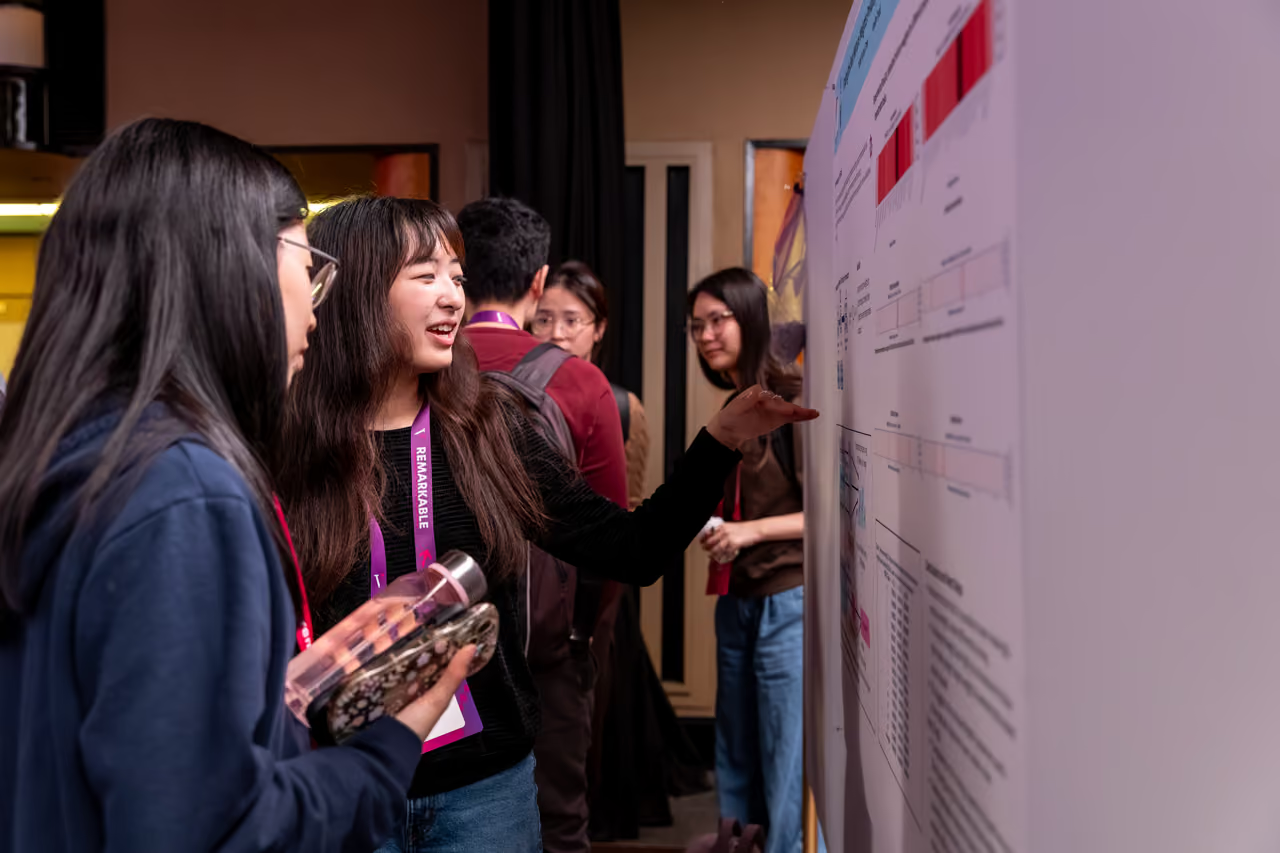
NeurIPS: Neural Information Processing Systems – an annual conference on machine learning and computational neuroscience.
ICML: International Conference on Machine Learning – an annual conference on machine learning research and its applications across science and industry.
ICLR: International Conference on Learning Representations – an annual conference on representation learning, a foundational area of deep learning and AI research.
CVPR: Conference on Computer Vision and Pattern Recognition – an annual conference on computer vision and pattern recognition, core areas of applied AI research.
EMNLP: Conference on Empirical Methods in Natural Language Processing – an annual conference in the area of natural language processing and AI.
Vector Faculty Members and Faculty Affiliates received some of Canada’s top fellowships and awards, recognizing their continued innovation and leadership in the field.
.avif)
Three Vector Faculty Members were elected Fellows of the Royal Society of Canada (RSC), Canada’s most prestigious academic honour.
Aspuru-Guzik’s contributions to quantum algorithms and AI algorithms for chemistry include the development of AI-discovered molecules for drug discovery and self-driving laboratories for accelerated materials discovery.
Ben-David, a world leader in machine learning theory, is known for research on adapting machine learned predictors to changes in the environment.
A groundbreaking researcher in AI for biomedicine, Wang has developed generative and foundation models that drive breakthroughs in genomics, medical imaging, and clinical decision-making.
Three members of the Vector community received Government of Ontario Early Researcher Awards for developments in AI that will improve lives in Ontario and around the world.
Erdogdu’s research seeks patterns in data to support development of power- and energy-efficient training methods for large-scale AI models.
Lindell is combining ultra-sensitive cameras with generative AI to improve imaging in extreme conditions such as near-total darkness or at high speeds.
Mohsenzadeh’s research combines advanced AI with cognitive neuroscience to improve support for people with memory disorders.
Vector Faculty Member and Canada CIFAR AI Chair Nicolas Papernot (University of Toronto) was awarded the 2025 Steacie Prize, one of Canada’s most prestigious early career awards for an engineer or scientist under age 40 who has made notable contributions to research in Canada.
Members of the Vector AI Engineering team and Vector researchers were recognized for their work in AI delivery and impact. These honours represent a selection of recognitions.
Sanja Fidler, Vector Faculty Member, Vector Co-Founder and Canada CIFAR AI Chair (University of Toronto and Vice President of AI research at NVIDIA), was named one of Maclean’s magazine’s New Nation Makers, a top 40 list of people across all walks of life who are redefining this country, making it stronger and more resilient.
Deval Pandya, former Vice President of Vector AI Engineering now turned AI founder, was named to the Globe and Mail Report on Business Canada’s Best Executives list for his work building the team that bridges research and real-world applications at Vector.
Shaina Raza, Vector Applied Machine Learning Scientist - Responsible AI, was recognized among the Stanford/Elsevier Top 2% Scientists, putting her among the top two per cent worldwide based on citation impact.
Vector researchers belong to one of Canada’s largest and most influential AI ecosystems, shaping the country’s broader AI landscape through Canada CIFAR AI Chair appointments, academic transitions, Canada-wide university partnerships, and AI safety networks.
As this community continues to grow, top AI researchers from across Canada and around the globe are choosing Ontario as a place to conduct research, create companies, and cultivate discoveries.
Vector’s community spans the full AI talent pipeline, from undergraduate researchers to postdoctoral fellows and globally recognized Vector Faculty Members, leading the way toward discoveries that deliver AI innovation for all Canadians.
Three Vector Faculty Members were named Canada CIFAR AI Chairs. The prestigious Chair Award comes with five years of dedicated research funding to pursue transformative research ideas and train the next generation of AI leaders.
Meet the seven Vector Faculty Members renewed as Canada CIFAR AI Chairs:
At the national level, Vector accelerates Canada’s competitive advantage through a network of academic partnerships across the country. This nationwide AI talent pipeline is fortified by regional strongholds like Ontario, which features a dense cluster of 28 Vector-recognized AI master’s programs across 13 universities.
Since its launch in 2018:
Yixiu (Helen) He is a master’s student in biomedical engineering at Western University. Working in the Advanced Pulmonary Imaging Lab at the Robarts Research Institute, she develops machine learning tools that analyze lung imaging data to help predict how asthma patients will respond to treatment. She credits the VSAI for making it possible for her to fully commit to her interdisciplinary research that brings together machine learning and pulmonary medicine.
“As an international student, the financial support removed a significant barrier, and the networking opportunities Vector provides have helped me connect with industry partners and researchers across Canada. It gave me the foundation and the confidence to dive into work I truly believe can change how we detect and treat lung disease.”
Safe AI is what makes innovation trustworthy, ensuring technology serves the public good, protects rights, and aligns with Canadian values. Vector Faculty Members and Faculty Affiliates are working to advance safe, responsible AI development and deployment in alignment with Vector’s mission. Nine members of the Vector community joined the Canadian AI Safety Institute (CAISI) Research Program at CIFAR.
Vector launched Killarney, Vector’s first national AI cluster to further support the AI community and expand computing capacity for researchers across Canada. Access to this high-performance computing environment represents a three-fold year-over-year increase in computing capacity, accelerating discovery and increasing the overall impact of their research. Killarney is part of the federally funded Pan-Canadian AI Compute Environment (PAICE) program and is integrated with the Digital Research Alliance of Canada’s service.

Vector’s research excellence is anchored by a deep concentration of health AI expertise, bringing technical depth to secure data environments for clinical innovation.
A University Health Network study found a way to monitor and predict heart failure as much as a week in advance using smartwatches. This early detection may allow for medical attention before the situation becomes an emergency. Vector Faculty Affiliate Chris McIntosh (University of Toronto), along with PhD researchers Yuan Gao and Bhavish Verma, were part of the research team on this study, developing an AI algorithm capable of accurately predicting heart failure based on smartwatch data. The paper appeared in Nature Medicine.
Understanding how the brain remembers images can inform the development of strategies for dementia care. Vector Faculty Member Yalda Mohsenzadeh (Western University) is undertaking research that combines advanced AI with cognitive neuroscience to better understand why certain images are more memorable than others. She received the 2025 Ontario Early Researcher Award for her project “Deep Neural Network Models of the Human Brain for the Pursuit of Next Generation AI.”
Vector Faculty Affiliate Researcher Abeer Badawi’s (York University) research focuses on making AI safe and trustworthy in mental health and dementia care. She develops tools that help AI systems support patients and care teams more reliably, whether that is detecting early signs of agitation in people living with dementia or evaluating whether AI tools are equipped to handle sensitive mental health conversations.

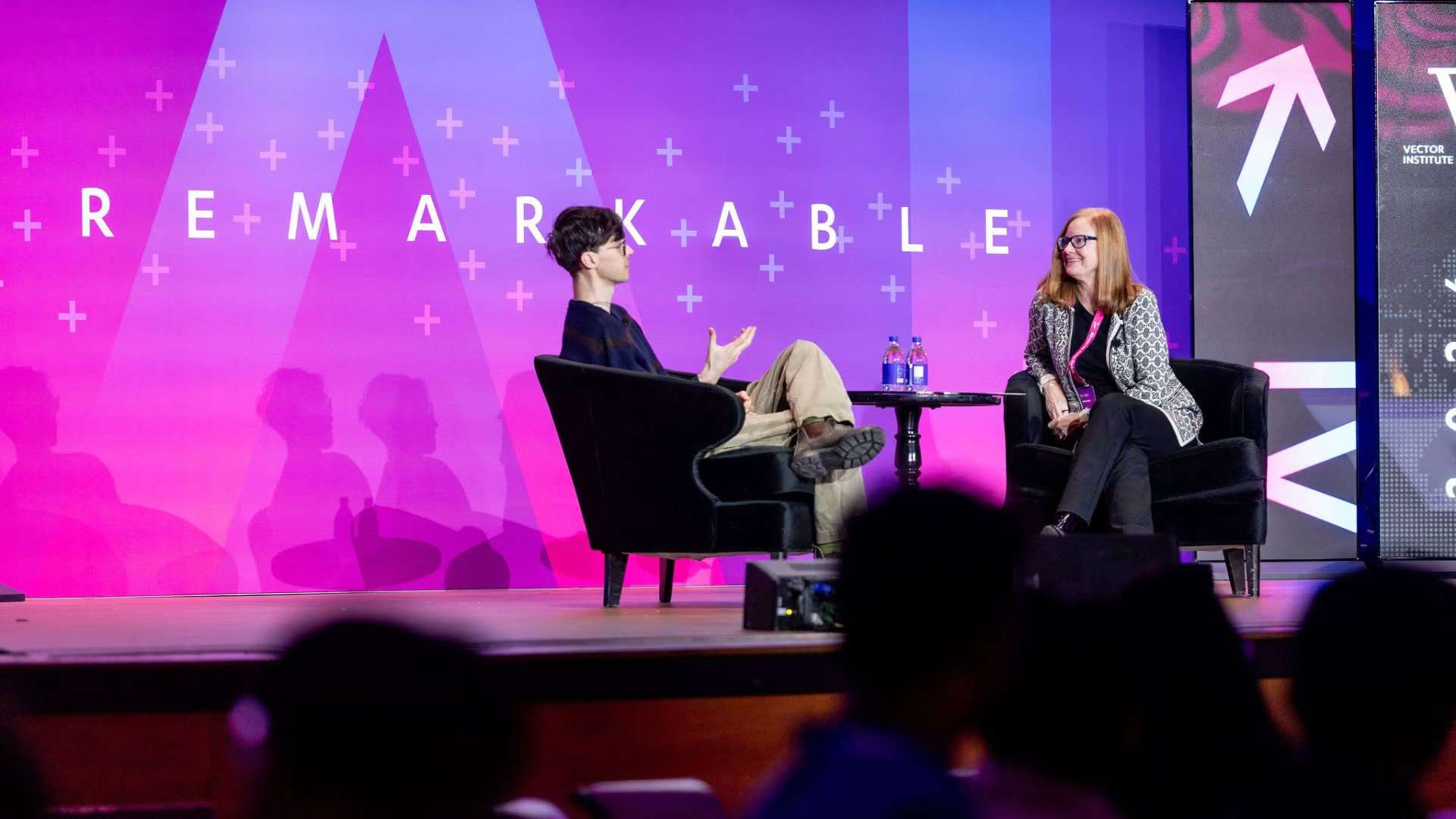

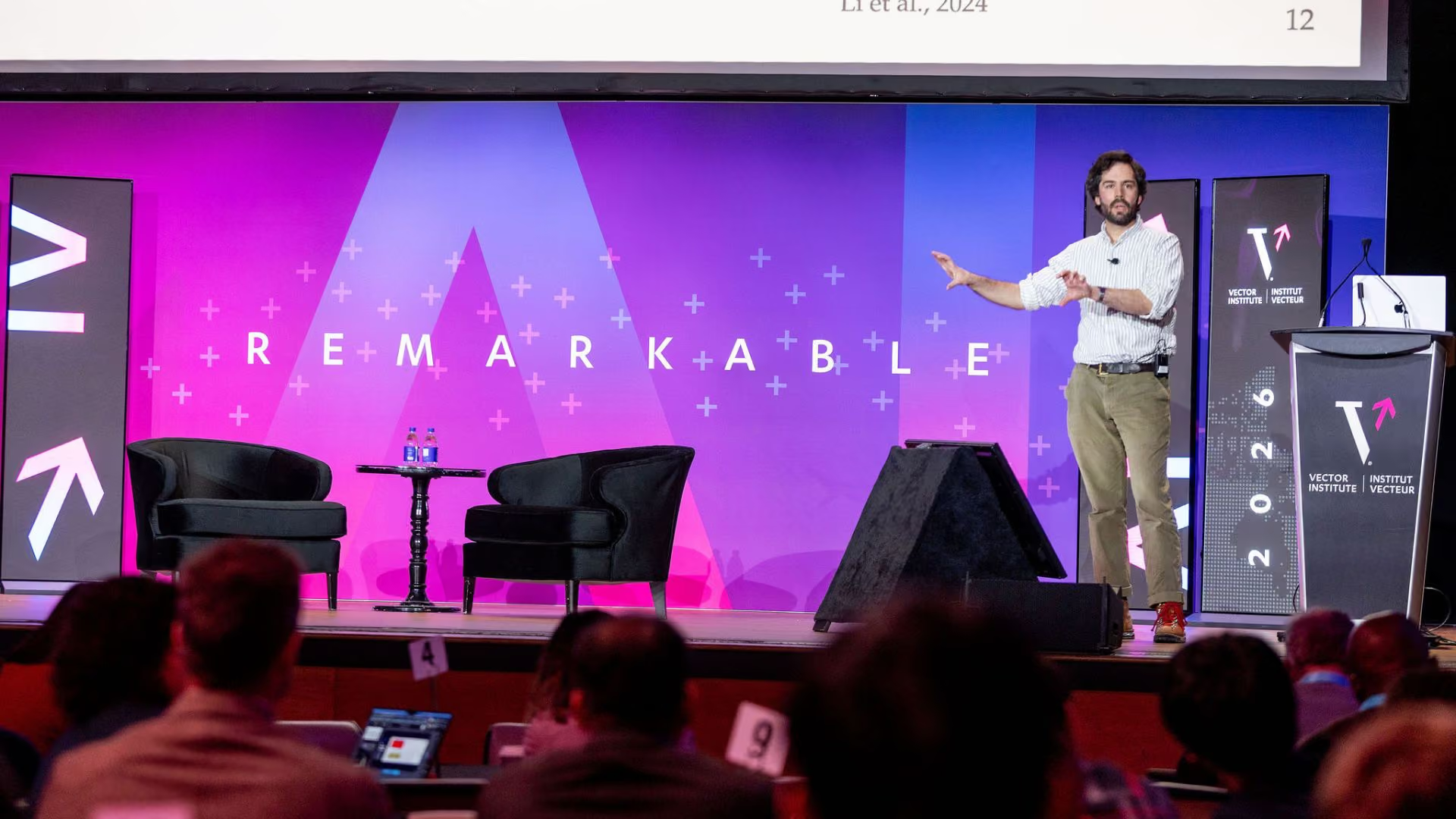
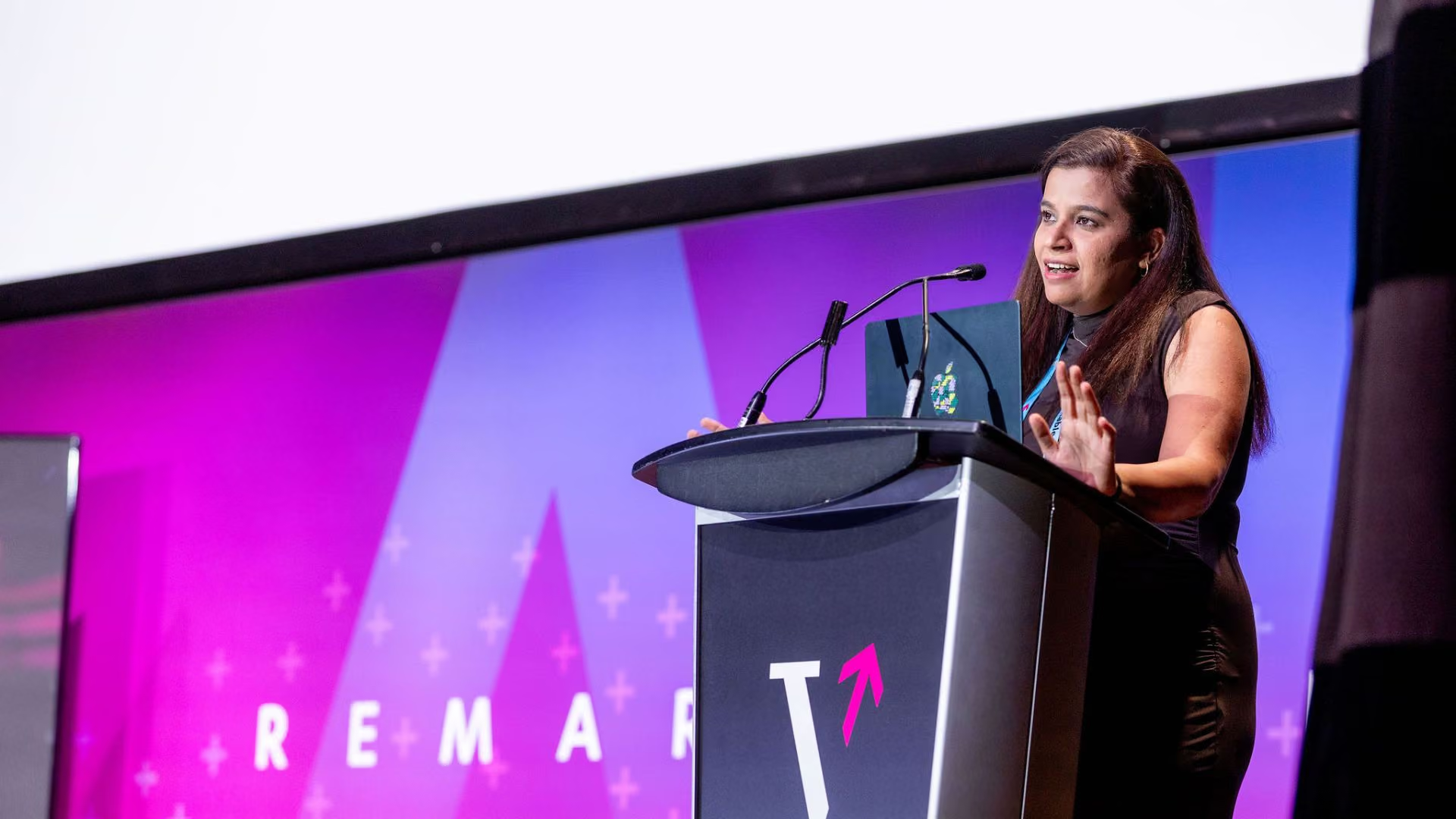

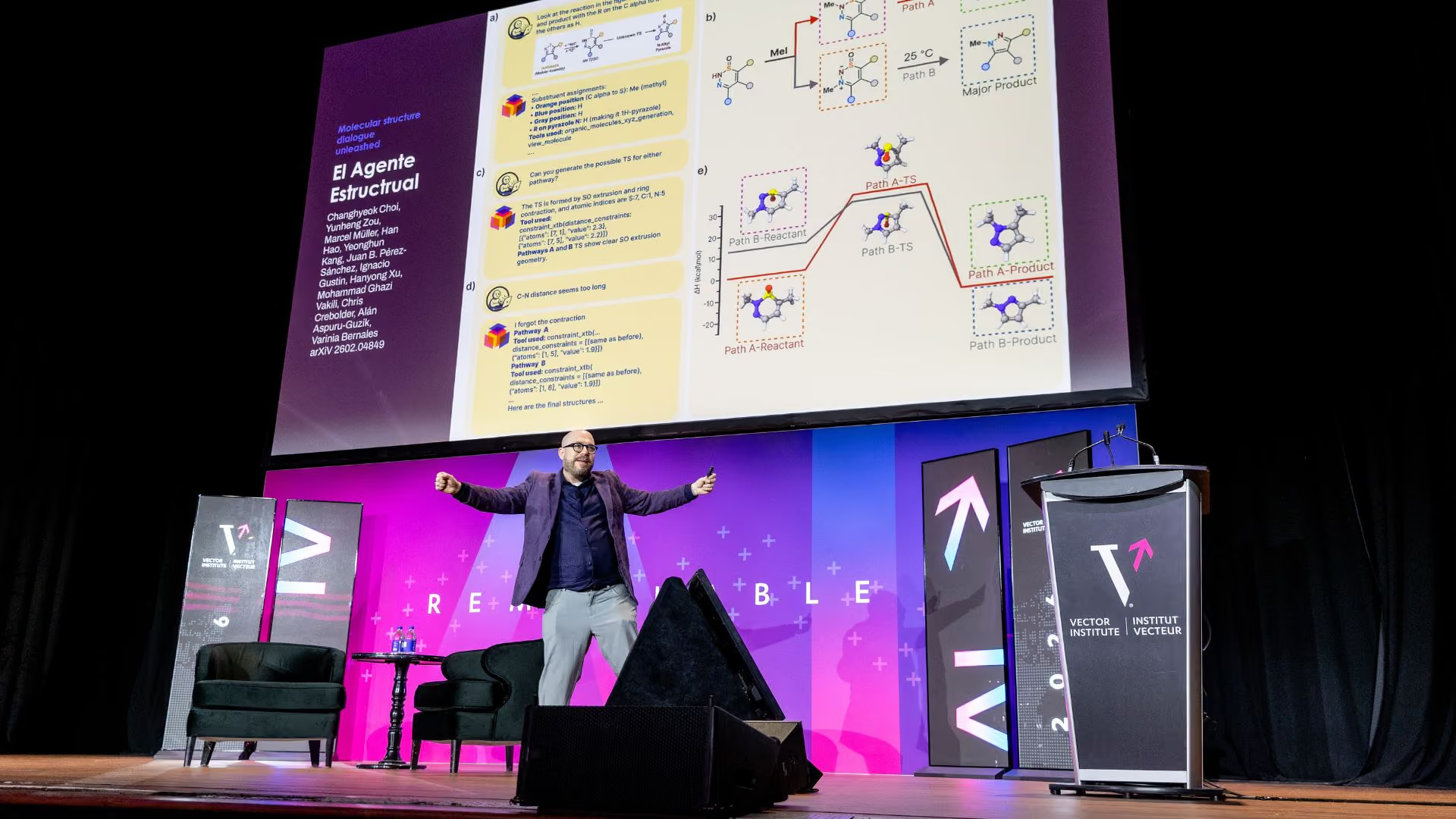

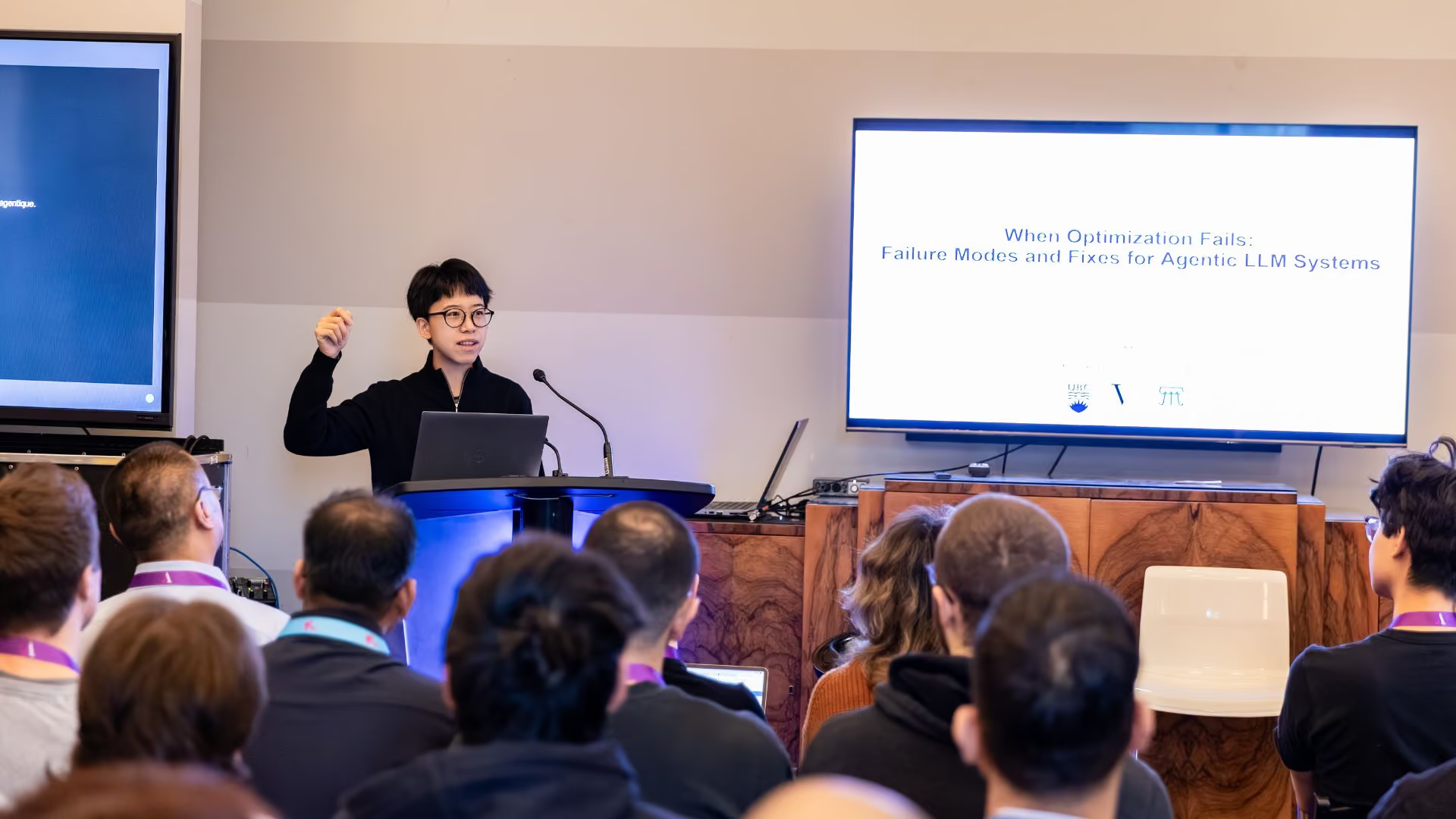
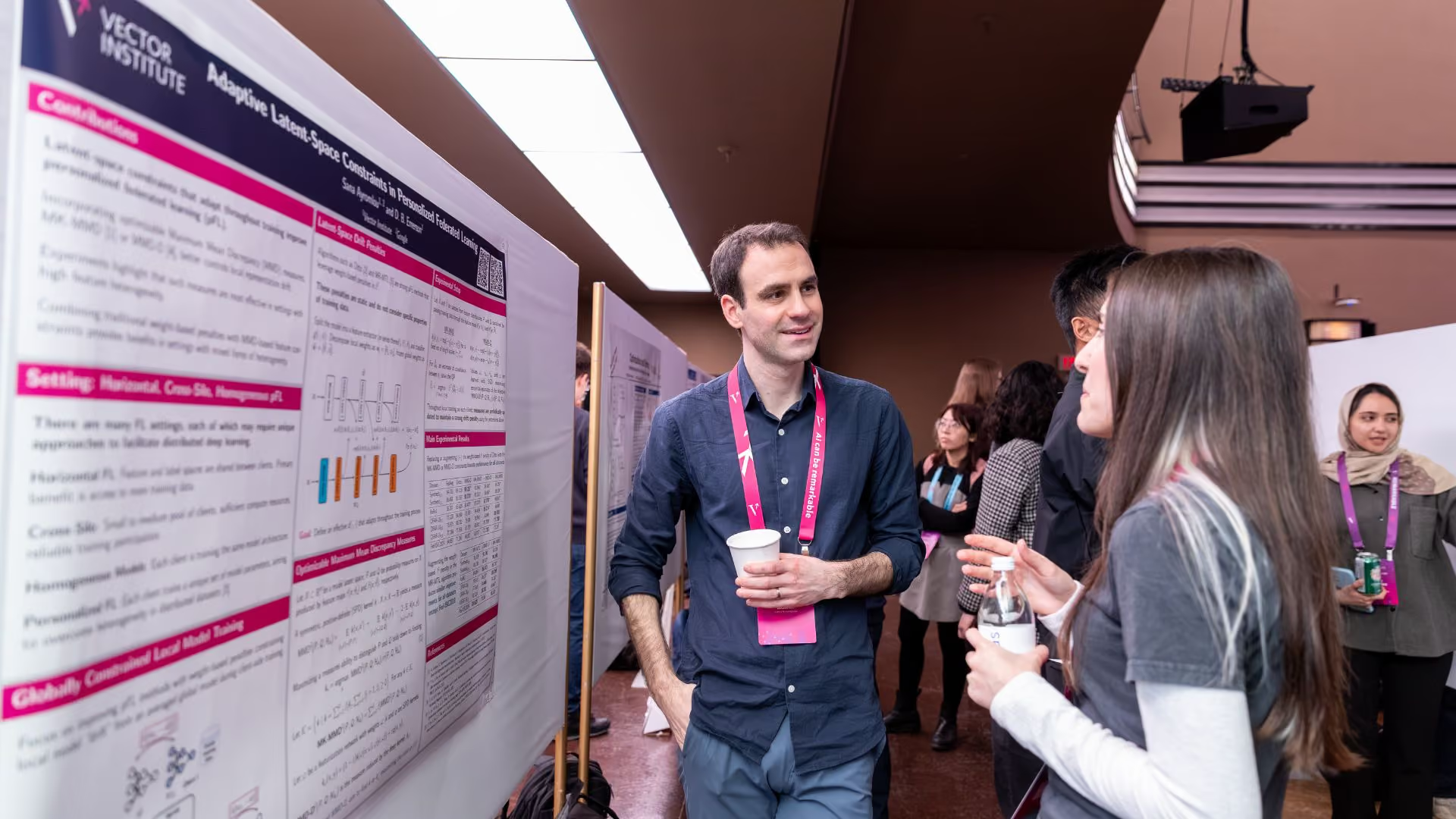
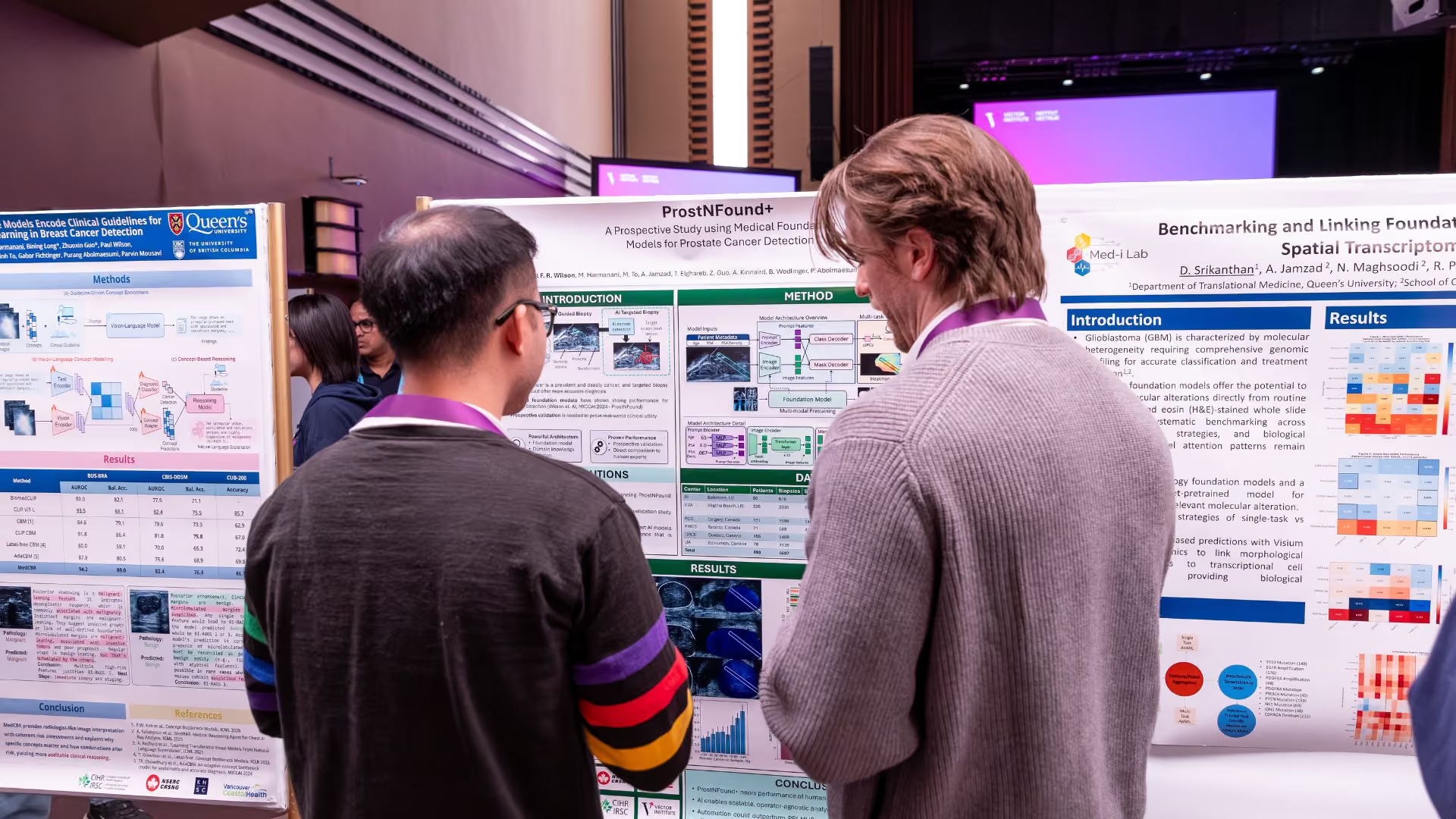
The vibrant Vector community moves ideas from discovery through to delivery. With AI Engineering tools, startup programs, mentorships, and collaboration with industry partners, the Vector ecosystem is helping to deliver real-world AI applications, creating economic growth, and reinforcing Canada’s place as a global AI leader.
Ontario is the engine of Canada’s AI economy. AI-related jobs in the province have already contributed between $42 billion and $52 billion over the last five years — nearly half of the estimated $82 billion to $100 billion already contributed by AI-related jobs nationally, according to new research from Deloitte Canada commissioned by Vector.
Between 2019 and 2024, AI-related employment contributed between $42 and $52 billion to Ontario’s real GDP cumulatively, with every AI job generating an average of $199,000 in economic value annually.
The report also showed that Ontario’s AI ecosystem has demonstrated significant growth; the number of companies investing in AI has increased by 149 per cent since 2019. This growth has created over 17,000 new AI-related jobs in 2024 to 2025 alone, bringing total AI-related employment to 39,327 positions. Looking ahead to 2025-2035, AI adoption is projected to:
Nationally, the report also profiled that Canada’s projected 2025-2035 AI-led growth includes:
Across Canada, AI-related jobs contributed between $82 and $100 billion to the national economy between 2019-2024 cumulatively, generating an average of $195,000 in economic value per job annually.
Delivering real-world AI implementation, Vector’s AI teams transform research into applicable tools, frameworks, and solutions.
Vector's AI Engineering team developed HumaniBench, the first comprehensive benchmark designed to evaluate whether AI demonstrates fairness, empathy, inclusion, and ethical reasoning—all needed for responsible deployment. The team found biases in nearly all leading AI models, particularly affecting age, race, and language.
Vector conducted a State of Evaluation study assessing 11 leading AI models from around the world using 16 benchmarks, including those pioneered by Vector researchers. The study marked the first time this expanded suite of benchmarks and underlying code was open-sourced, with results accessible in an interactive leaderboard.
Vector collaborated with GEMINI, Unity Health Toronto, and Diabetes Action Canada to develop an interpretable AI model that can predict post-discharge foot complications in people with diabetes. Called CRISPNAM-FG, it can identify which patients are at highest risk of losing a limb while showing clinicians the factors driving that risk.
Vector released version 2.0 of its practical guide to planning, deploying, and governing AI in clinical environments. It includes real-world scenarios, and checklists addressing data security, model performance, and bias. It also integrates CyclOps, a Vector-developed tool for detecting data shifts and evaluating model fairness.

Vector is committed to supporting Canadian AI startups as they work to turn their innovations into products. Vector’s FastLane and HealthSpark programs connect startups with Vector researchers, AI engineers, and resources to help them build, scale, and commercialize their work.
Vector’s FastLane helps startups commercialize their ideas and compete in the global economy through strategic support in the form of cutting-edge AI research, expertise, and access to top AI talent. The companies’ involvement with Vector has put a number of FastLane startups in the spotlight, generating coverage in media outlets ranging from industry trade press to business news.
ASKaFOX needed to evolve its tech stack with more current AI technologies, and Vector's FastLane program helped to accelerate this journey. Through Vector’s programming, ASKaFOX gained an early advantage in exploring various AI models, developing expertise in LLM and generative AI (GenAI) techniques. This expertise enabled the company to advance its SAAS tool, which helps industrial companies find critical suppliers. ASKaFOX has now expanded its business into international markets.
“Without the help of specialized institutions like Vector, I think it would take us much longer, and I will say, a steeper path to reach where we are now.”
B3 Systems wanted to expand its GenAI capabilities by using vast manufacturing data to generate real-time insights for customers and improve chatbot performance. Through Vector’s FastLane program, B3 gained advanced AI expertise and is now on track for a 200 per cent revenue increase driven by its improved AI-driven platform.
“Partnering with Vector was a great way to quickly deepen our AI domain knowledge and accelerate product development in a fast-evolving field.”
PAVE needed to replace certain manual processes, such as VIN and odometer readings, with reliable AI. The company participated in Vector’s FastLane program, where team members gained the skills and development support needed to build custom AI models. Two months after the program, the models were live, improving the solution’s accuracy by 98 per cent across 100,000 monthly VIN and odometer readings.
“Vector is a must-have partner—helping us build world-class AI, giving us access to top AI talent, improving our product, and fast-tracking our path to millions in ARR.”
Vector hosted a Venture Capitalists (VC) Demo Day, connecting FastLane startup founders with the resources, talent, and capital they need to turn their discoveries into real-world products. The event saw 12 FastLane startups pitch their products to four expert judges, with about 30 VCs in the audience. In addition, a broader group of FastLane graduates had the opportunity to connect with the investors in attendance, further building connections across the vibrant Vector AI ecosystem.
The Honourable Evan Solomon, Minister of Artificial Intelligence and Digital Innovation and Minister responsible for the Federal Economic Development Agency for Southern Ontario, announced an investment of $3.5 million for Vector to deliver HealthSpark—an initiative to fast-track AI innovation in Canadian health care and services. With this support from Vector founded by the federal government, high-potential scaleups and startups will receive training, mentorship, and access to key networks and AI engineering expertise, as they develop AI solutions to tackle some of Canada’s most pressing health care challenges.
Through HealthSpark, Verto built upon its existing Population Health solution and accelerated development of advanced AI capabilities that allow clinicians and analysts to query patient data using plain language. The solution allows a user to simply type in a question, then the AI retrieves the correct data instantly. This instantaneous response capability will save clinicians time on manual chart reviews, speed up population health operations, and allow Verto to compete with multinational AI competitors.
“The Vector Institute Health Spark program truly moved the needle for us and helped us gain speed to market to compete on the national and international stage.”
MedMe Health was developing a new product to allow community pharmacies to use AI voice agents to handle both inbound and outbound patient calls. Given the sensitive nature of the calls, MedMe needed to test whether the AI might accidentally give medical advice, mishandle private information, or struggle to understand patients with different accents and speech patterns. With Vector’s support, MedMe built a stress-test framework enabling the company to fix safety and fairness issues before launching its new product, the AI Patient Concierge.
“The HealthSpark program enabled us to gain AI expertise and assurance through expert testing that the voice agents we are building are accessible and equitable to all patients across Canada.”
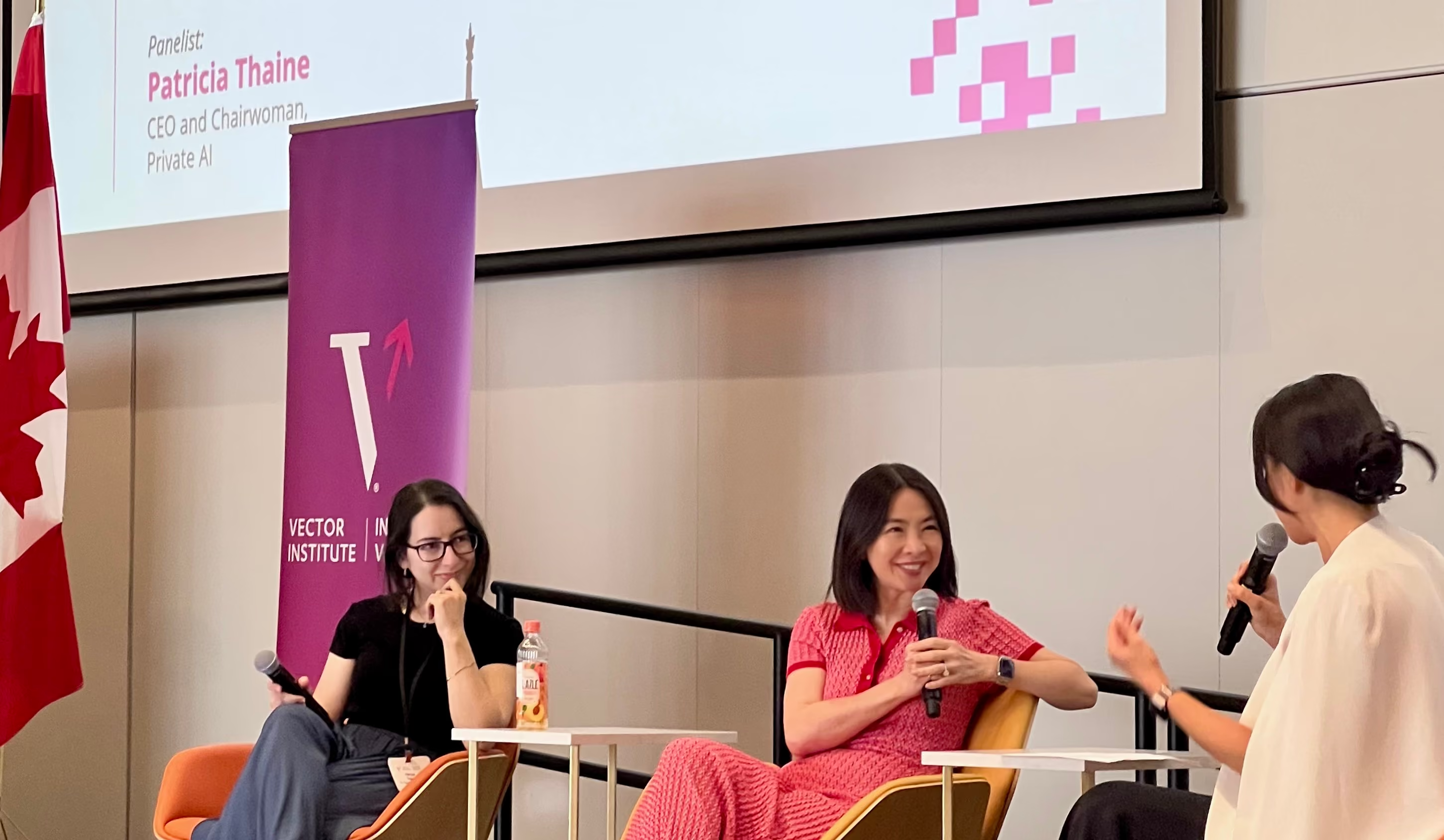
Vector turns innovative research into real business value, embedding AI into the fabric of Canadian enterprise.
Vector’s industry sponsors are integral to the AI discoveries and real-world applications delivered across the Vector ecosystem. These organizations are also at the leading edge of AI adoption in Canada, driving competitive advantage with the research, talent, and tools available to them in partnership with Vector.




























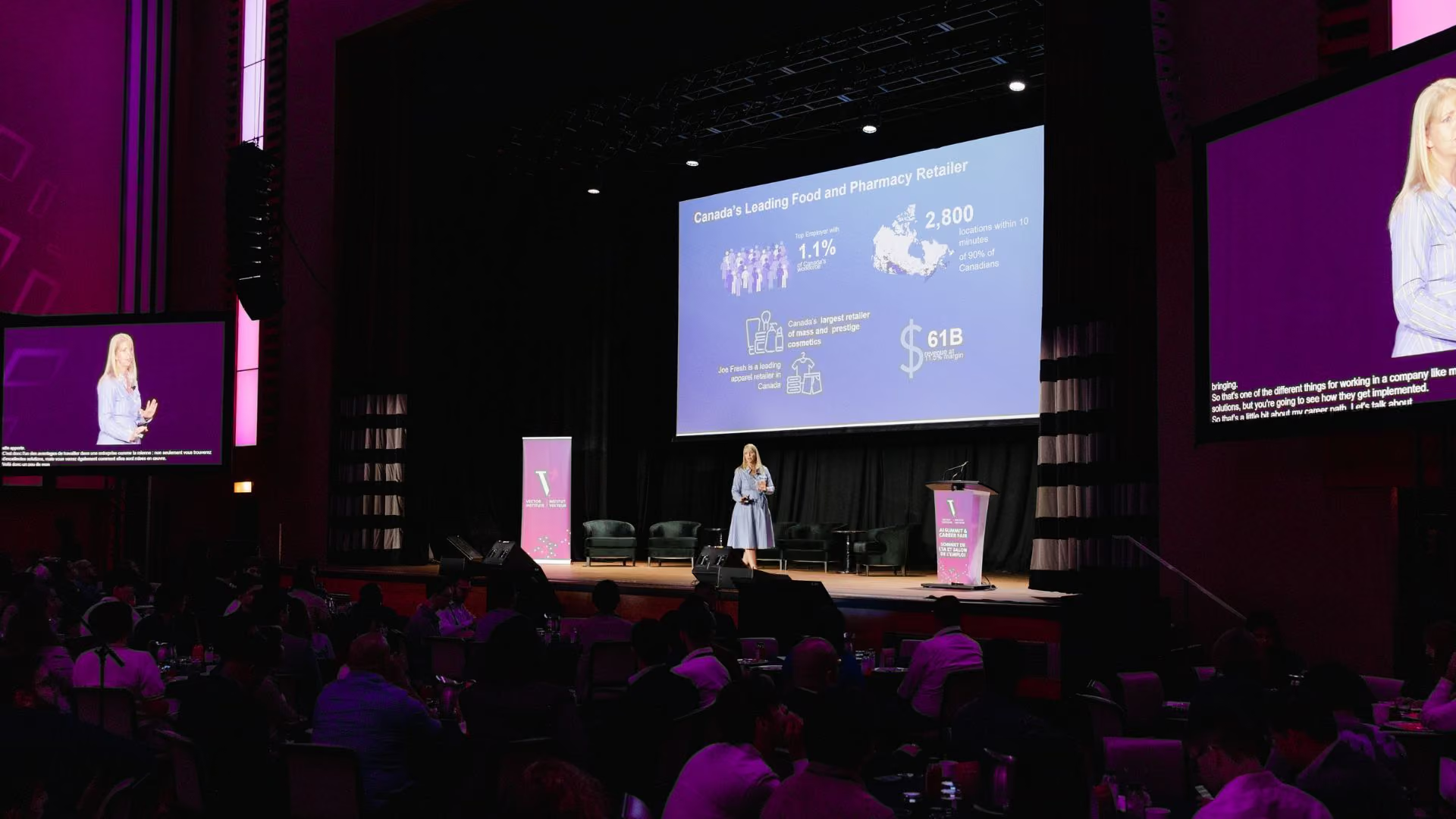
Vector’s internships, mentorship programs, and career-building events are helping to prepare the AI practitioners Canada needs to compete globally.
The Vector AI Summit and Career Fair 2025 brought together AI professionals, industry leaders, and students who gained insights and built connections with more than 30 companies, including Loblaw, Canadian Tire, PwC, and TD.
Dahong (Steven) Song, a master's student in Data Science and AI at the University of Waterloo and past VSAI recipient, attended the Vector AI Summit & Career Fair where he connected with Roche Canada. He secured an eight-month internship as an analytical data scientist with the company shortly after applying through the Vector Digital Talent Hub. Now he is directly advancing health care through AI.



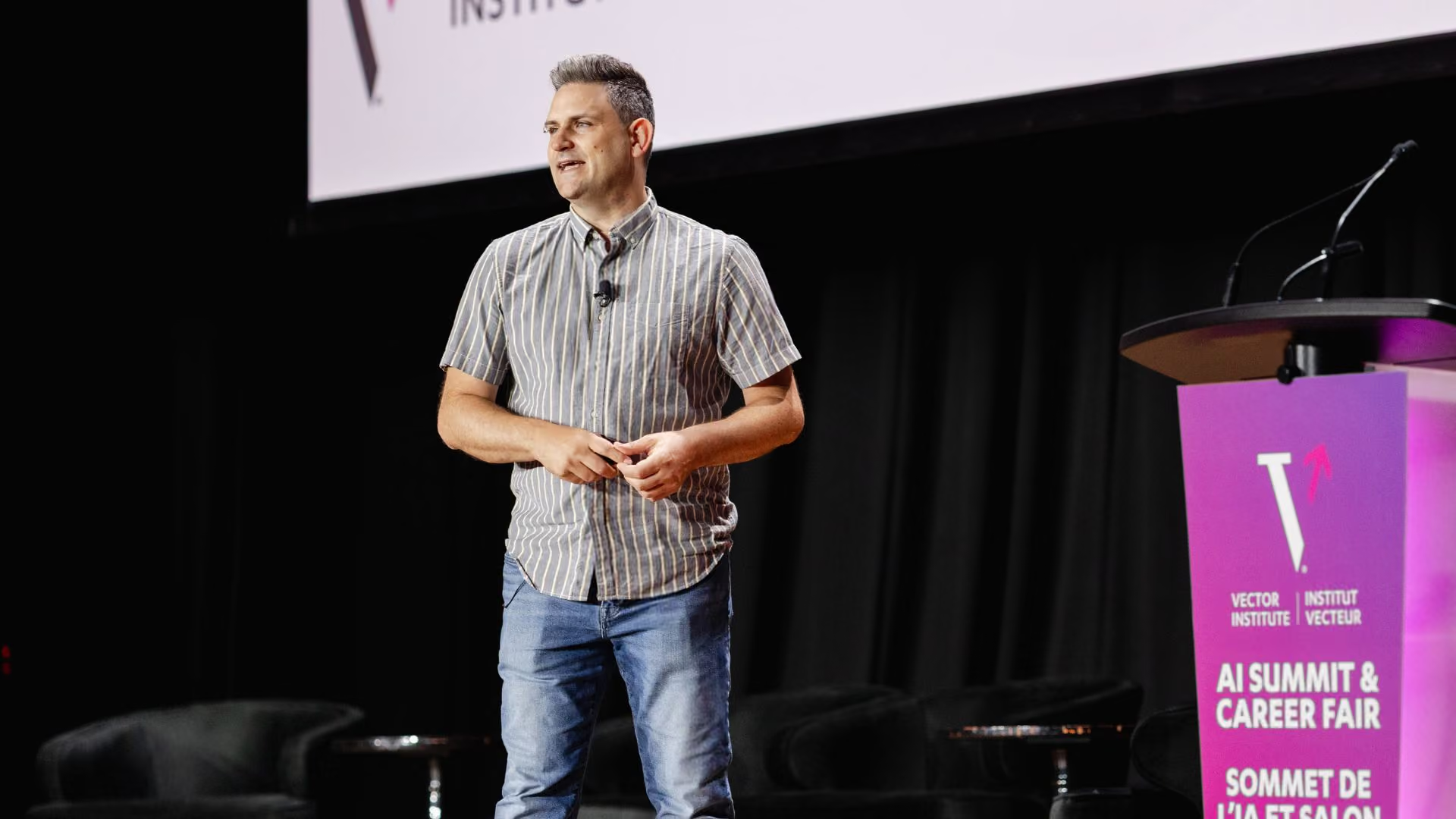


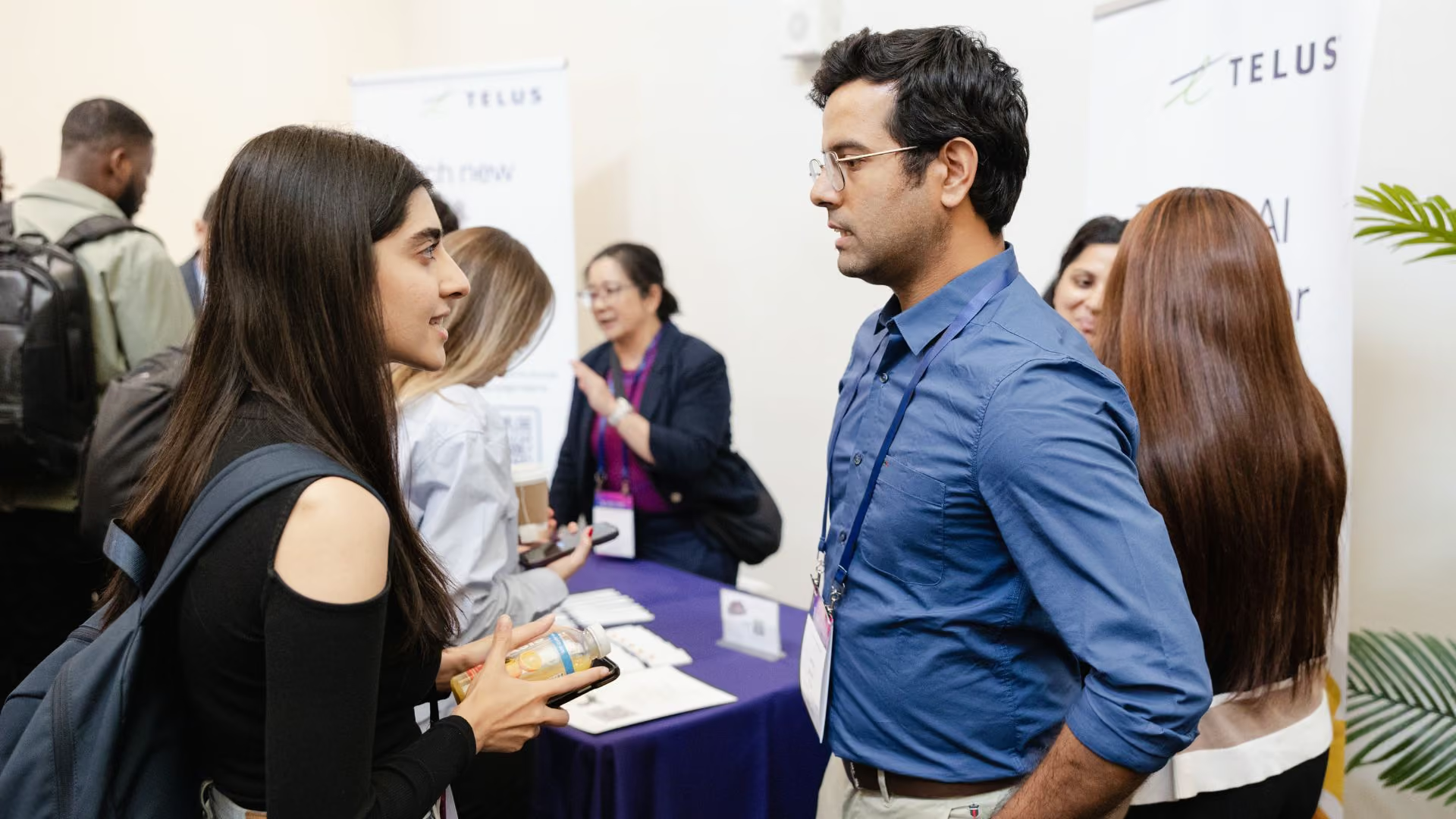
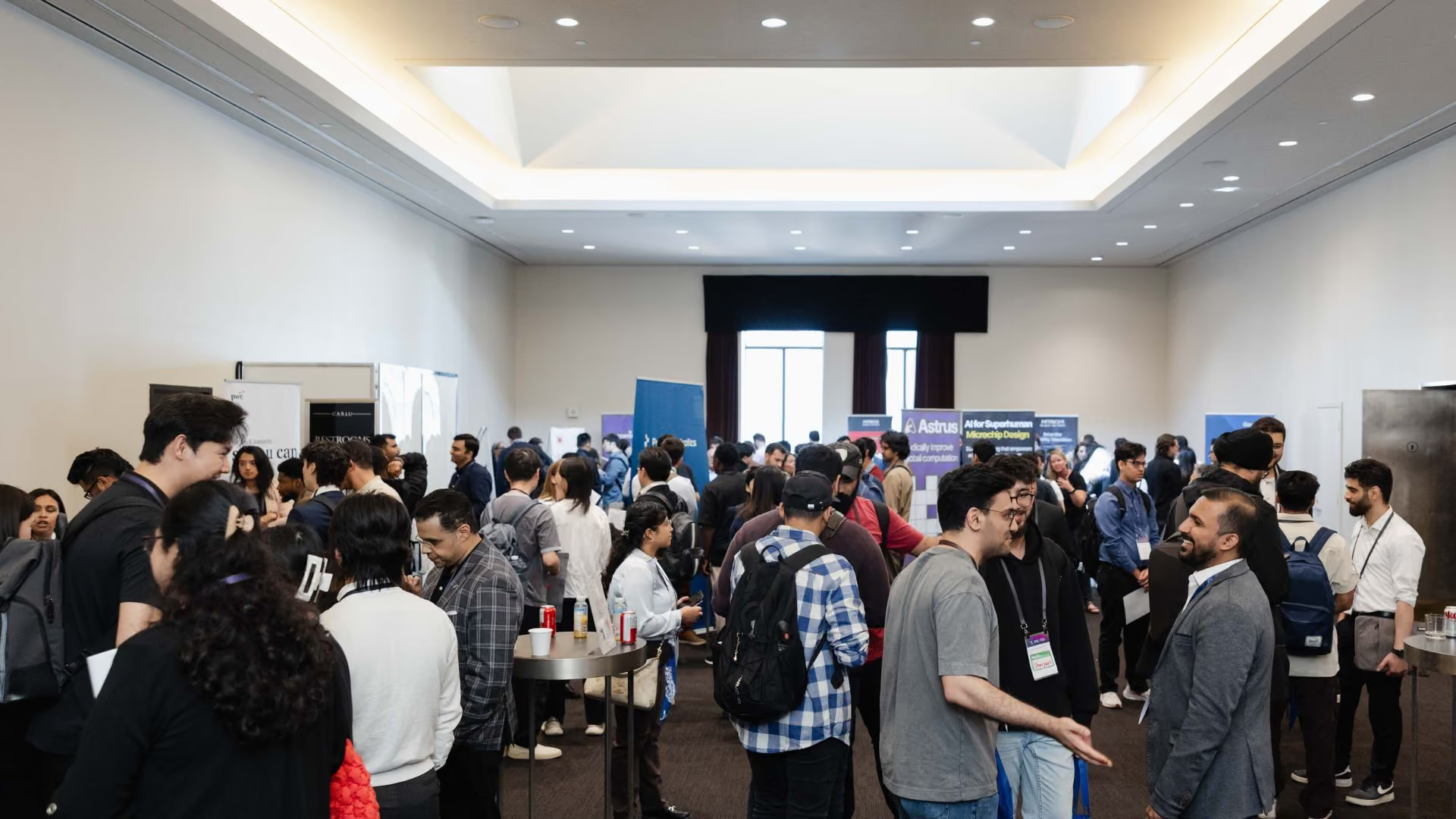

Senior AI talent is rare, and industry enterprises can find it difficult to recruit this talent using their existing channels. To help sponsors with hard-to-fill specialized roles, Vector created a Senior Search pilot, drawing directly from Vector’s deep talent pool to support industry demand. In its first year, the Vector team successfully filled 38% of the senior roles that came through the pilot, including Senior Data Scientist and Senior Machine Learning Engineer roles.
Vector launched a partnership with ICTC that will offer internship subsidies to eligible FastLane companies through ICTC’s national Work-Integrated Learning (WIL) Digital program. Over the next three years, the $1.5 million Vector-ICTC collaboration will support 150 paid student AI work placements.
Vector’s IMPACT Mentorship Program matches early-career AI talent with senior professionals. Through this program, participants gain access to structured mentorship, including career guidance and professional connections. The program reflects Vector's commitment to building a strong, diverse, and connected AI talent pipeline that supports innovation across Canada's AI ecosystem.
“I find immense purpose in helping Vector Institute students and graduates move beyond the ‘MVP’ of their technical skills to a place where they can navigate the nuances of the AI landscape. At the end of the day, my biggest hope is that my mentees are not only prepared for those important interviews but also have a structured mindset that scales across their entire careers.”
Hadi Abdi Ghavidel
Senior Natural Language Processing Specialist, Bell
Vector IMPACT program mentor
At Vector, research, talent, and organizations come together to turn promising AI ideas into real progress for people, industry, and society—moving from discovery to delivery.Thank you for being part of the Vector community, and thanks to Vector’s funders, the Government of Canada, Government of Ontario, and leading enterprise sponsors from across the Canadian economy, without whom the Vector Institute would not have been possible.
Stay in touch as Vector continues to shape AI innovations of tomorrow. Sign up for the Vector newsletter
Kelsey Allen
Hassan Ashtiani *
Alán Aspuru-Guzik
Shai Ben-David
Marcus Brubaker *
Mike Brudno
Wenhu Chen
Jeff Clune
David Duvenaud
Murat Erdogdu
Sanja Fidler
David Fleet
Brendan Frey *
Igor Gilitschenski *
Anna Goldenberg
Roger Grosse
Gillian Hadfield
Xi He
Alec Jacobson *
Gautam Kamath
Rahul G. Krishnan
Xiaoxiao Li
Renjie Liao
Chris Maddison
Anne Martel *
Sheila McIlraith
Marina Meila
Yalda Mohsenzadeh *
Seyed Mohamad Moosavi *
Parvin Mousavi
Nicolas Papernot
Vardan Papyan *
Gennady Pekhimenko
Toniann Pitassi
Geoff Pleiss
Pascal Poupart
Colin Raffel
Daniel Roy
Frank Rudzicz
Sivan Sabato
Sushant Sachdeva *
Evan Shelhamer
Freda Shi (Haoyue Shi)
Florian Shkurti *
Vered Shwartz
Leonid Sigal
Graham Taylor
Ruth Urner *
Raquel Urtasun *
Nandita Vijaykumar *
Anatole von Lilienfeld
Bo Wang
Yaoliang Yu
Richard Zemel
Hongyang Zhang *
Victor Zhong
Xiaodan Zhu *
*Indicates not a Canada CIFAR AI Chair
Ajay Agrawal
Benjamin Alarie
Ayesha Ali
Ashton Anderson
Shahab Asoodeh
Ricardo Baptista
Timothy Barfoot
Suzanna Becker
Ben Blencowe
Colin Bellinger
Vaughn Betz
Mamatha Bhat
Yuri Boykov
Michael Brown
Neil Bruce
Kieran Campbell
Juan Felipe Carrasquilla Álvarez
Timothy Chan
Fanny Chevalier
Radu Craiu
Elliot Creager
John Connolly
William Cunningham
Mark Daley
Yuntian Deng
Konstantinos Derpanis
Sven Dickinson
Elham Dolatabadi
Thomas Doyle
James Elder
Melike Erol-Kantarci
Benjamin Fine
Federico Gaiti
Animesh Garg
Saeed Ghadimi
Ali Ghodsi
Aleksandrina Goeva
Avi Goldfarb
Melissa Greeff
Katarina Grolinger
Jessica Gronsbell
Maura Grossman
Yuhong Guo
Benjamin Haibe-Kains
Jason Hattrick-Simpers
Mohamed Hibat Allah
Jesse Hoey
Michael Hoffman
Ting Hu
Ihab Ilyas
Hui Jiang
Tracy Jenkin
Alistair Johnson
Yonatan Kahn
Nachiket Kapre
Elias B. Khalil
Amir-Hossein Karimi
Jonathan Kelly
April Khademi
Farzad Khalvati
Ashish Khisti
Micha Koziarski
Anastasis Kratsios
Agustinus Kristiadi
Kyros Kutulakos
Kate Larson
Vianey Leos Barajas
Sean Lewis Hill
Mufan Li
David Lie
Jimmy Lin
Charles Ling
David Lindell
Dan Lizotte
Yiwei Lu
Amin Madani
Tegan Maharaj
Muhammad Mamdani
Chris McIntosh
Paul McNicholas
Kuldeep Meel
Roger Melko
Alex Mihailidis
Jason Millar
Quaid Morris
Andreas Moshovos
Wenlong Mou
Christian Muise
Jeffrey Negrea
Anthony Niblett
Mihai Nica
Aleksandar Nikolov
Shweta Mahajan
Sageev Oore
Anna Panchenko
Gerald Penn
Fahad Razak
David Rokeby
Laura Rosella
Jeffrey S. Rosenthal
Reza Samavi
Benjamin Sanchez-Lengeling
Scott Sanner
Gregory Schwartz
Luis Seco
Laleh Seyyed-Kalantari
Nisarg Shah
Bhavin Shastri
Xujie Si
Amber Simpson
Jared Simpson
Devin Singh
Karan Singh
Stephen L. Smith
Ranil Sonnadara
Lincoln Stein
Suzanne Stevenson
Lisa Strug
Sriram Ganapathi Subramanian
Bo Sun
Yu Sun
Babak Taati
Isaac Tamblyn
Rick Valenzano
Olga Veksler
Amol Verma
Boyu Wang
Linbo Wang
Steven Waslander
Joseph Jay Williams
Yang Xu
Yimin Yang
Grace Yi
Albert Yoon
Fattane Zarrinkalam
Joel Zylberberg
Elham Bagheri
Rob Brekelmans
Marco Ciccone
Leonardo Cotta
Felix Dangel
Jing Dong
Pascale Gourdeau
Varun Gupta
Yeonghun Kang
Toryn Klassen
Tsz Wai Ko
Tosca Lechner
Xinting Liao
Wu Lin
Scott Lowe
Olivia McLaughlin
Silviu Pitis
Tanzila Rahman
Maria Ryskina
Pritam Sarkar
Harsh Satija
Changjian Shui
Sana Tonekaboni
Centre for Addiction and Mental Health
Carleton University
Dalhousie University
Hospital for Sick Children
Lakehead University
McMaster University
Ontario Institute for Cancer Research
Ontario Tech University
Queen's University
Sinai Health
Sunnybrook Research Institute
Toronto Metropolitan University
Trillium Health Partners
University Health Network
University of British Columbia
University of Guelph
University of Ottawa
University of Toronto
University of Waterloo
University of Windsor
Western University
York University
BMO Financial Group*
CIBC*
Google*
Loblaw Companies Limited*
NVIDIA*
RBC*
Scotiabank*
TD Bank Group*
Thomson Reuters*
Accenture*
Air Canada*
Bell
Boehringer Ingelheim (Canada) Ltd.
Canadian Tire Corporation, Ltd.
CN
Deloitte Canada*
EY Canada*
Georgian*
Hitachi Rail*
KPMG Canada*
KT Corporation
Magna International*
PwC Canada*
Roche
Sun Life Financial*
TELUS*
Unilever
ada
AltaML
Avidbots
BenchSci
Blue J
Canvass Analytics Inc.
Cohere
Deep Genomics
DNAStack
FreshBooks
Integrate.ai
League
Limina (formerly Private AI)
MindBridge Analytics Inc.
Riskfuel
Shakudo
Signal 1
TrojAI
Ubenwa
*Indicates a founding sponsor
Ed Clark, Chair
Shauneen Bruder
Ashley Casovan
Melissa M. Chee
Leah Cowen
Charmaine Dean
Janet L. Ecker
Chaviva Hosek
Michael Serbinis
Jamie Wallace
Miyo Yamashita
Glenda Crisp, President & CEO
Jessica Blackman, Director, Chief Data Officer
Gary Burlakoff, Director, Finance
Kari Clarke-Zemnickis, Vice President, Marketing & Communications
Ben Davies, Chief Information Officer
Myra Fernandes, Director, Human Resources & Corporate Services
Melissa Judd, Vice President, Research Operations & Academic Partnerships
Deval Pandya, Vice President, AI Engineering (Note: Kathryn Hume joined as Vice President, AI Engineering in May 2026)
Daniel Roy, Research Director
Pascal Poupart, Interim Research Director (Note: Pascal Pourpart joined as Interim Research Director as of January 2026)
Cameron Schuler, Chief Commercialization Officer & Vice President, Industry Innovation
Roxana Sultan, Chief Partnerships Officer
Alan Veerman, Chief Operations & Finance Officer
The Vector Institute is funded by the Government of Canada, the Government of Ontario, and leading industry sponsors from across the Canadian economy.



This report is for informational purposes only and Vector Institute is not, by means of this report, rendering professional advice or services or providing an opinion of any kind on any subject. No one should act upon or refrain from acting upon the information contained in this report without obtaining the advice of a qualified professional advisor. You are urged to contact a qualified professional advisor for guidance. Vector Institute does not warrant or guarantee the accuracy, currency, usefulness, or completeness of the information contained in this report, which may include information obtained from third party sources. Vector Institute shall not have any responsibility or owe any duty to any person in respect of this report or be responsible for any loss whatsoever sustained by any person who relies on this report. All content in this report is either created by Vector Institute, or otherwise used with permission and is protected by copyright. All rights are reserved. No part of this report may be reproduced without the prior written permission of Vector Institute.
About Vector Institute
Launched in 2017, the Vector Institute works with industry, institutions, startups, and governments to build AI talent and drive research excellence in AI to develop and sustain AI-based innovation to foster economic growth and improve the lives of Canadians. Vector aims to advance AI research, increase adoption in industry and health through programs for talent, commercialization, and application, and lead Canada towards the responsible use of AI. Programs for industry, led by top AI practitioners, offer foundations for applications in products and processes, company-specific guidance, training for professionals, and connections to workforce-ready talent. Vector is funded by the Province of Ontario, the Government of Canada through the Pan-Canadian AI Strategy, and leading industry sponsors from across multiple sectors of Canadian Industry. For further information or media enquiries, please contact: media@vectorinstitute.ai
Platinum sponsor RBC’s Borealis AI research centre collaborated with Vector on a project that addresses mule account fraud—bank accounts that are often used to transfer illicit funds. They explored the potential of federated learning in detecting mule account fraud, with a focus on privacy and fairness, and developed a solution that both aligns with responsible AI principles and tackles a significant challenge in the financial services industry.
Platinum sponsor TD’s Layer 6 AI centre of excellence collaborated with Vector Faculty Member and Canada CIFAR AI Chair Rahul Krishnan (University of Toronto) on the first large-scale causal foundation model—an AI model trained on different hypothetical “what-if” scenarios that helps people choose the best option. The effect of this collaboration means an expert no longer has to study the data by hand—and because a single foundation model can handle many different applications, the technology can scale to applications across the enterprise with much less overhead.
Gold sponsor EY, in partnership with Vector and Queen’s University, introduced the Bias Knowledge Graph (BiasKG) framework and effective unlearning techniques that offer strategies for organizations to enhance transparency and trust in their AI systems.
Gold sponsor Roche has renewed its collaboration with Vector through to 2030. This renewal continues a partnership that has supported the growth of AI development and use in health since 2020. One notable Roche initiative involved using AI to analyze social media posts to identify patterns in long COVID symptoms, helping clinicians better understand and treat patients.
At Vector's Agentic AI Bootcamp, Silver sponsor Linamar's team developed an AI chatbot that enables technicians to ask questions in natural language and receive step-by-step instructions with links to the right page in physical manuals. This intelligent maintenance assistant cuts troubleshooting time down to seconds so technicians can repair machines more quickly, minimizing costly downtime.
“After validating the use case through a low-code proof of concept, we had a team participate in Vector Institute’s Agentic AI Bootcamp to intentionally build internal capability. This allowed us to move beyond experimentation and develop more robust, agentic solutions that scale to higher-impact operational use cases.”